Who is Martin?
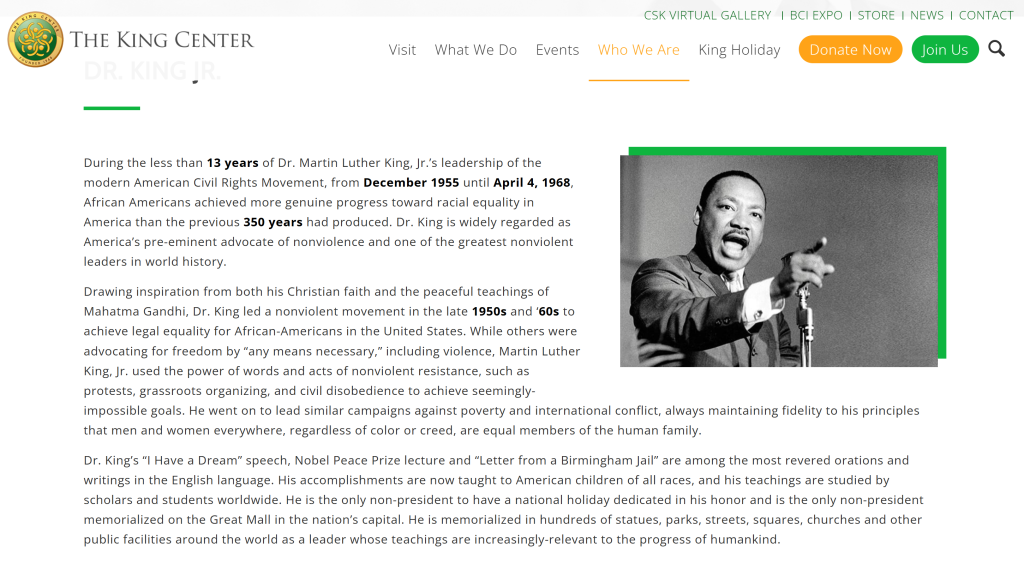
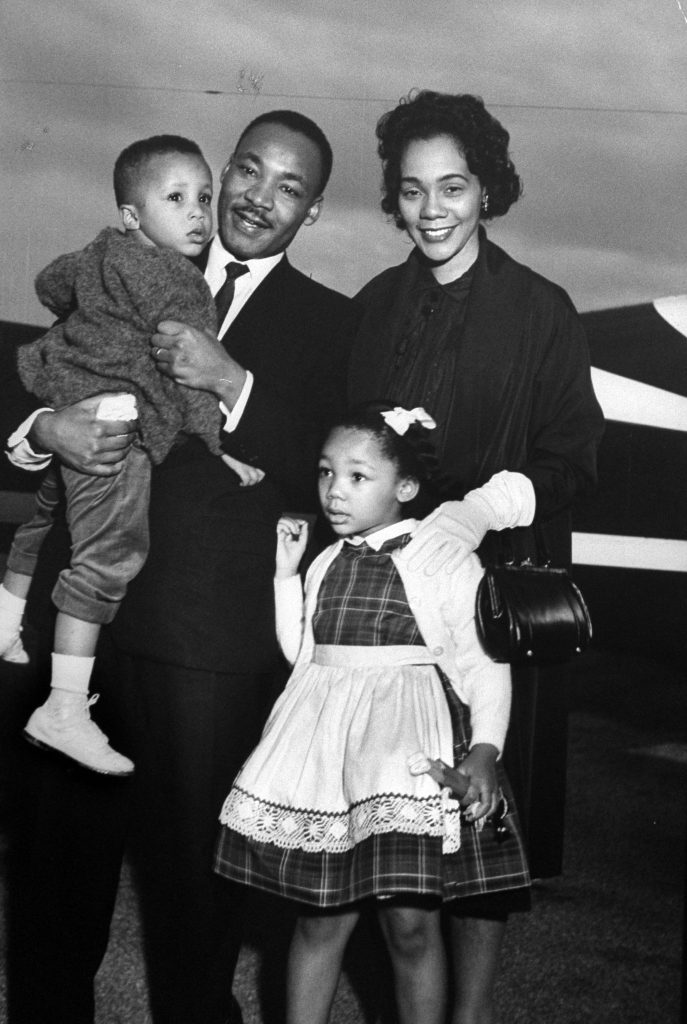
Martin Luther King Jr. was born on January 15, 1929, in Atlanta, Georgia. The community where he grew up in, Hunter Hills, was middle class, which offered some protection from the harsh racial conflicts of the Jim Crow South. Yet, he experienced many instances of racial discrimination, which helped heighten his awareness of the inequalities of the times while also inspiring his desire for change. One of the climactic experiences that shifted his perspective was being separated from his close childhood friend simply because the boy was white and went to a segregated school.
His father, Martin Luther King Sr., also played a significant role in shaping Martin’s worldview. Reflecting on his father’s influence, King Jr. once said, “I think that my strong determination for justice comes from the powerful and dynamic personality of my father.” His father was a respected leader in the community and served as the pastor of Ebenezer Baptist Church. Martin Luther King Sr. set the precedent for the religious perspectives King Jr. would adopt. It was easy for King Jr. to embrace these religious attitudes because his father carried out the fundamental principles of love and service everywhere he went, especially at home.
Martin was also smart and eloquent at a young age, traits likely inherited from his father. He earned his Bachelor of Arts in Sociology at Morehouse College. He continued his studies at Crozier (a theological seminary institute), where he earned his Bachelor of Divinity. Later on in 1955, he acquired his Ph.D. in Systematic Theology at Boston University.
This academic foundation equipped King Jr. with an understanding of social systems, theology, and moral reasoning, tools he would later draw upon as a national leader.
What Defined Martin?
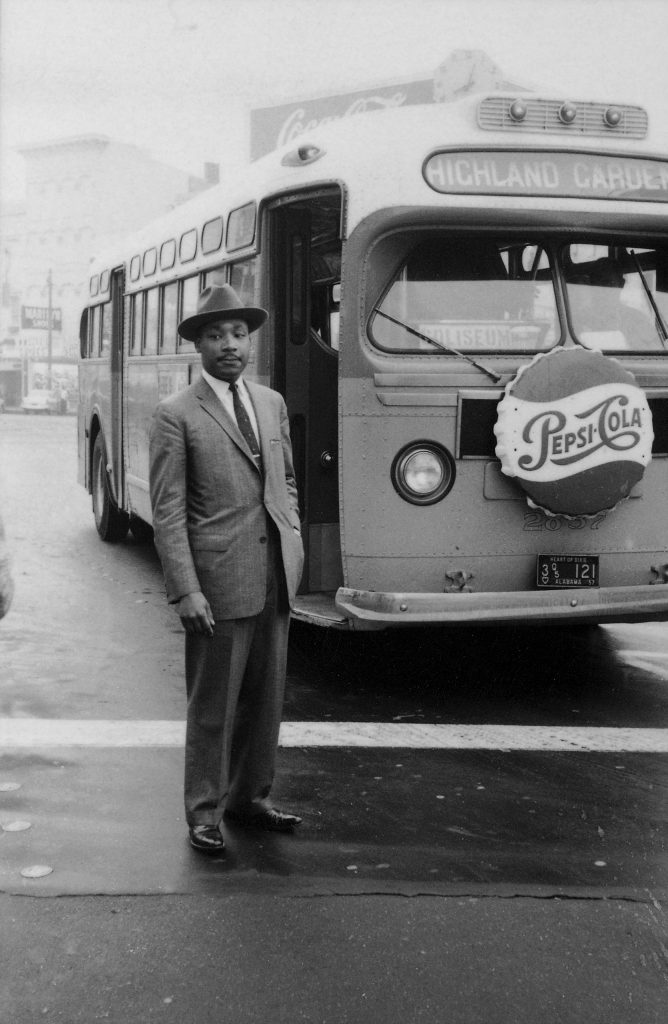
It’s hard to pinpoint a singular moment in history that defines Martin Luther King Jr.’s legacy. Some highlight his central role in the Montgomery bus boycott. This campaign was the most remarkable and successful expression of nonviolent resistance ever witnessed in America at the time.
Others point to his leadership with the Southern Christian Leadership Conference (SCLC), where he had formed a national platform to express his concerns about America’s racial injustice climate. Martin Luther King Jr.’s organization was known for rallying nonviolent protests in locations such as Birmingham and Selma. These protests aimed at moving the national conscience and forcing the federal government to support civil rights initiatives. Beyond public demonstrations, the organization empowered African Americans through voter education initiatives such as the Citizenship Education Programs.
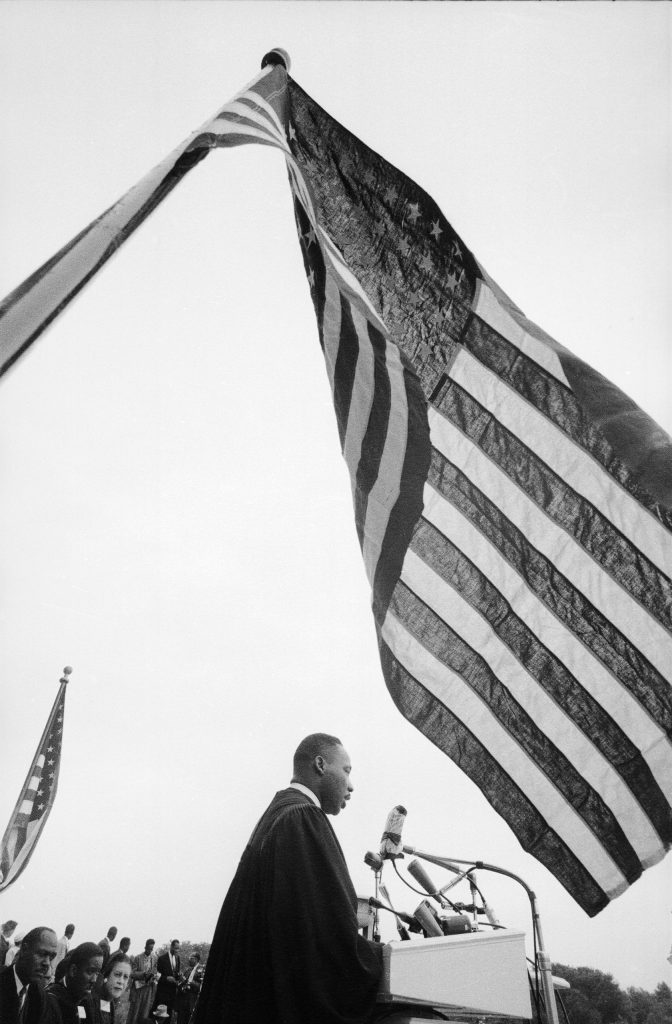
One of the most iconic moments of Martin Luther King Jr. life came in 1963 during the March on Washington, where he delivered his historic “I Have a Dream” speech. Here, he displayed his masterful oratory skills, addressing the economic and social injustices faced by African Americans. This moment was the most catalyzing event to initiate legal sanctions against racial discrimination and inequality. Hallmark legislation changes influenced by King include the Civil Rights Act of 1964 and the Voting Rights Act of 1965.
His unwavering efforts toward peace and freedom eventually earned him the Nobel Peace Prize.
Behind the scenes, Martin served as a pastor at Ebenezer Baptist Church and Dexter Avenue Baptist Church, where his ideas were influenced by the religious grounds of the gospel.
All in all, it is challenging to decipher what single moment defines his legacy.
What was interesting about him was that he was in a state of constant evolution, undergoing transformative change to acquire the requisite capacity to carry the burdens of the times. The resistance that opposed the civil rights movement was insurmountable, but through his faith, Martin was able to lead the movement and overcome the barriers of social injustice. In a particular instance during the Birmingham Campaign of 1963, Martin demonstrated his unwavering faith by doubling back on his philosophy of love and civil disobedience. This campaign led to many protesters being arrested, hosed down, and met with police brutality. His drive allowed him to keep pressing on, even in the confines of jail. King maintained a commitment to nonviolence and encouraged continued peaceful demonstrations. The images seen in Birmingham shocked the nation and shifted public opinion, increasing pressure on political leaders to act. The campaign eventually led to the desegregation of Birmingham’s public facilities.
Conversation About Dreamers
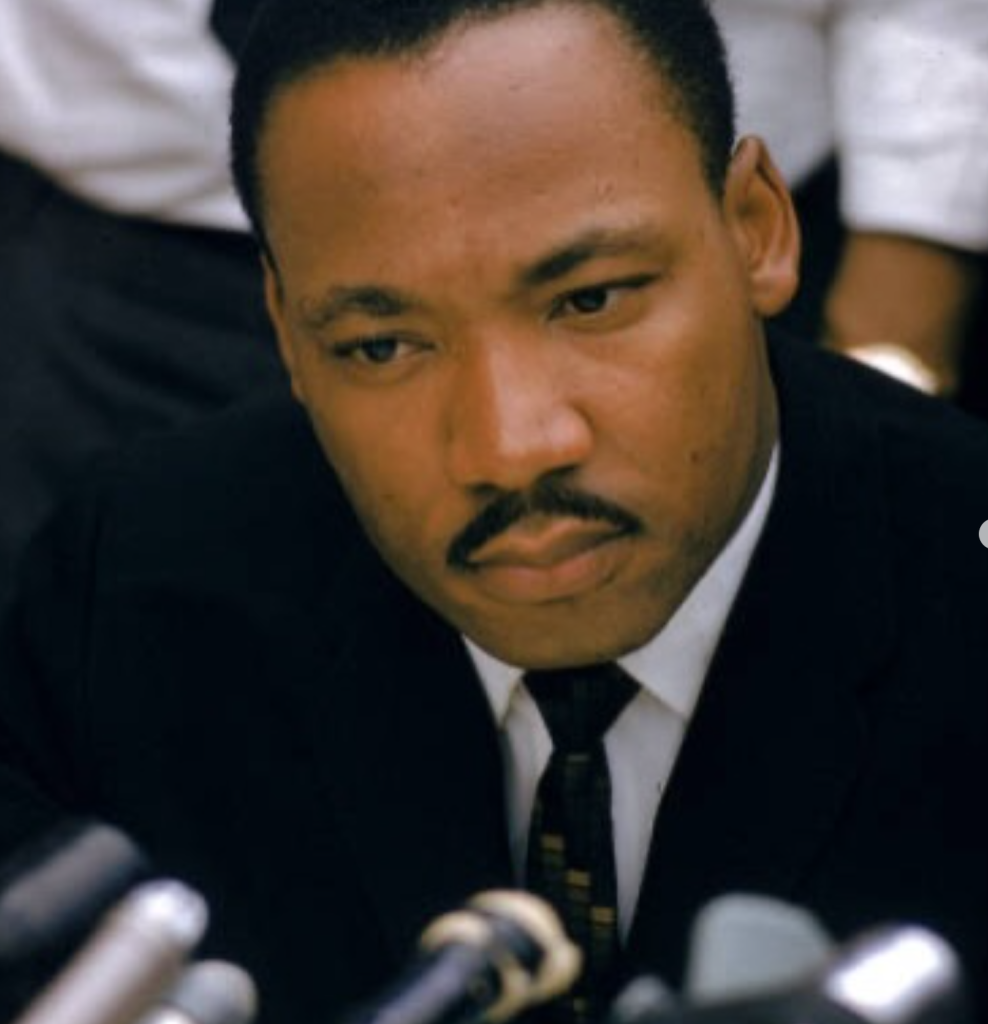
Take time to reflect on the legacy Martin Luther King Jr. has built and the mark he left in history. His influence continues to inspire generations, serving as a reminder that dreams come true when driven by purpose and conviction.
The perfect way to picture Martin is to think of him as water. Water is constantly transforming, with the ability to change its form to meet environmental demands. It is graceful in a stream, yet thunderous and chaotic in the sea during a storm. It flows around obstacles, yet over time, it can erode the strongest rock. This is Martin. In much the same way, King adjusted his approach to meet the demands of the movement. Whether it was him using the repetitive force of gradualism with every peaceful protest or using powerful rhetoric that stirred the consciousness of our nation. Or when shifting perspectives, traveling to India to understand a better way of solving problems, through civil disobedience.
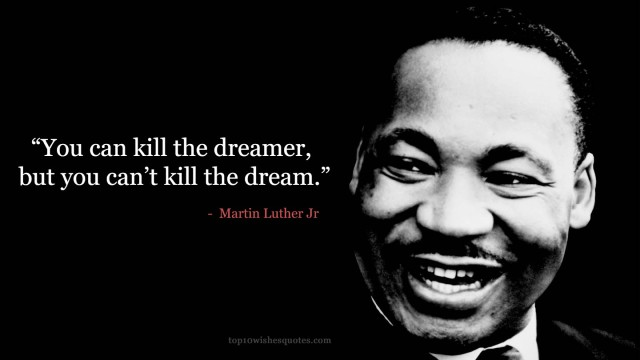
Every approach served the same purpose: ensuring that his dream would one day become reality.
Let Martin Luther King Jr. serve as an example whenever you have a dream that feels out of reach. Whether it requires bold action or peaceful consistency, his life offers a blueprint for turning vision into lasting change.
As we reflect on his life and work, take time to read Martin Luther King Jr’s March on Washington transcript, “I Have a Dream”:
I am happy to join with you today in what will go down in history as the greatest demonstration forfreedom in the history of our nation.
Five score years ago a great American in whose symbolic shadow we stand today signed the
Emancipation Proclamation. This momentous decree is a great beacon light of hope to millions of Negroslaves who had been seared in the flames of withering injustice. It came as a joyous daybreak to end the long night of their captivity. But 100 years later the Negro still is not free. One hundred years later the life of the Negro is still badly crippled by the manacles of segregation and the chains of discrimination.
One hundred years later the Negro lives on a lonely island of poverty in the midst of a vast ocean of material prosperity. One hundred years later the Negro is still languished in the corners of American society and finds himself in exile in his own land. So we’ve come here today to dramatize a shameful condition. In a sense we’ve come to our nation’s capital to cash a check. When the architects of our Republic wrote the magnificent words of the Constitution and the Declaration of Independence, they were signing a promissory note to which every American was to fall heir. This note was a promise that all men—yes, black men as well as white men—would be guaranteed the unalienable rights of life, liberty and the
pursuit of happiness. . . .
We must forever conduct our struggle on the high plane of dignity and discipline. We must not allow our creative protests to degenerate into physical violence. . . . The marvelous new militancy which has engulfed the Negro community must not lead us to distrust all white people, for many of our white brothers, as evidenced by their presence here today, have come to realize that their destiny is tied up with our destiny.
We cannot walk alone. And as we walk, we must make the pledge that we shall always march ahead. We cannot turn back. There are those who are asking the devotees of civil rights, “When will you be satisfied?” We can never be satisfied as long as the Negro is the victim of the unspeakable horrors of police brutality.
We can never be satisfied as long as our bodies, heavy with the fatigue of travel, cannot gain lodging in the motels of the highways and the hotels of the cities.
We cannot be satisfied as long as the Negro’s basic mobility is from a smaller ghetto to a larger one. We can never be satisfied as long as our children are stripped of their adulthood and robbed of their dignity by signs stating “For Whites Only.” We cannot be satisfied as long as the Negro in Mississippi cannot vote and the Negro in New York believes he has nothing for which to vote. No, no, we are not satisfied, and we will not be satisfied until justice rolls down like waters and righteousness like a mighty stream.
I say to you today, my friends, though, even though we face the difficulties of today and tomorrow, I still have a dream. It is a dream deeply rooted in the American dream. I have a dream that one day this nation will rise up, live out the true meaning of its creed: “We hold these truths to be self-evident, that all men are created equal.”
I have a dream that one day on the red hills of Georgia sons of former slaves and the sons of former slave-owners will be able to sit down together at the table of brotherhood. I have a dream that one day even the state of Mississippi, a state sweltering with the heat of injustice, sweltering with the heat of oppression, will be transformed into an oasis of freedom and justice.
I have a dream that my four little children will one day live in a nation where they will not be judged by the color of their skin but by the content of their character. I have a dream.
I have a dream that one day in Alabama, with its vicious racists, with its governor having his lips dripping with the words of interposition and nullification, one day right there in Alabama little black boys and black girls will be able to join hands with little white boys and white girls as sisters and brothers.
I have a dream today.
This will be the day when all of God’s children will be able to sing with new meaning. “My country, ’tis of thee, sweet land of liberty, of thee I sing. Land where my fathers died, land of the pilgrim’s pride, from every mountainside, let freedom ring.” And if America is to be a great nation, this must become true. So let freedom ring from the prodigious hilltops of New Hampshire. Let freedom ring from the mighty mountains of New York. Let freedom ring from the heightening Alleghenies of Pennsylvania. Let freedom ring from the snowcapped Rockies of Colorado. Let freedom ring from the curvaceous slopes of California.
But not only that. Let freedom ring from Stone Mountain of Georgia. Let freedom ring from Lookout Mountain of Tennessee. Let freedom ring from every hill and molehill of Mississippi, from every mountain side. Let freedom ring.
When we allow freedom to ring—when we let it ring from every city and every hamlet, from every state and every city, we will be able to speed up that day when all of God’s children, black men and white men, Jews and Gentiles, Protestants and Catholics, will be able to join hands and sing in the words of theold Negro spiritual,
“Free at last, Free at last, Great God a-mighty, We are free at last.”
To get a better understanding of who Martin Luther King Jr. was, here are some resources. These sources will provide a comprehensive overview of everything he stood for and how his impact is being felt all around the world.
King Center