Love
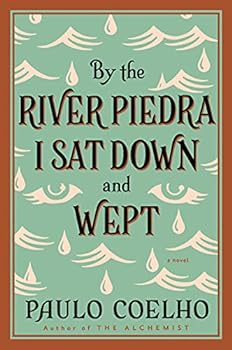
By the River Piedra I Sat Down and Wept.
by Paulo Coelho
Summary:
Paulo Coelho’s By the River Piedra I Sat Down and Wept is a beautiful story that follows Pilar, the protagonist, as she reunites with her childhood love after years apart. They end up reconnecting after her childhood friend sends a letter inviting her to attend a conference he would be speaking at. When they finally met up in Madrid, after the event, he insisted she stay longer than expected. Once Pilar accepted and took a leap of faith, leaving everything back at home to spend more time with her childhood friend, everything changed. They spent time together in different settings, getting to relearn each other while also challenging their love for each other. He reveals he has been loving her since he left town as a kid and that fate brought them together. Pilar also had so many internal conflicts to battle throughout the narrative. She is challenged to confront her abandoned faith and revisit ideals that were hard to digest. They embark on a journey answering some of life’s biggest questions. Though this beautiful story serves as the backdrop for this reflection, the purpose of it is not to analyze the narrative in detail. (Although I would highly recommend reading it!!)
The main themes from this story include spirituality, reflection, faith, purpose, and most of all, love. The author uses the transformative power of love to influence Pilar’s spiritual/emotional development and growth throughout the narrative. Although the story contains many interconnected themes, the purpose of this reflection is to use the themes Coelho explores as a lens through which to examine love as a concept, independent of the plot, and to understand what love truly is in its many forms.
What’s love?
Love is a difficult concept to grasp. Yet despite its complexity, love remains the most powerful and transformative force in the human experience. To truly understand it, one must examine it across its many expressions.
In the context of romantic love, it is an action word. It requires intentional work in order to establish and sustain its presence. If you love your partner, you should comfort them, do acts of service for them, and encourage them. When genuine, love carries a restorative power. Love is tender enough to heal. It affirms the worth of the other and recognizes their inherent value.
In the traditional sense, when considering the love between two people, it is patient, kind, and not self-seeking; it is gentle, truthful, and persevering. This simple framework, transcribed from historical texts (the Bible), helps give a better idea of how one should operate when love is in the midst. This transcends the love between a partner and allows you to extrapolate to varying love dynamics such as the love between siblings, colleagues, family, friends, etc.
In addition to this, it is important to understand that this love is sacrificial. The narrative by Paulo Coelho gives a good example of what this looks like. In short, he portrays two impoverished individuals at their engagement gathering, exchanging gifts. The groom had nothing except his grandfather’s watch, which was bequeathed to him after his death. He decided to sell it in order to afford a gift for his soon-to-be wife. The bride’s only valuable possession was her long, resplendent hair. She ended up cutting it off and exchanging it for a gift to present to her soon-to-be husband. This scene is a quintessential illustration of what physical sacrifice looks like. Sacrifice is the willingness to voluntarily put your partner’s interests above your own. Coelho’s illustration shows that there is no love without sacrifice.
Moving forward, romantic love requires vulnerability. With vulnerability, both parties must grant each other access to their authentic selves. This is somewhat scary because many people move through the world concealing their true selves, presenting a carefully constructed facade to conform to the expectations of those around them. People are comfortable here, but to remove that facade and be uncomfortable is to be vulnerable. And doing so risks rejection. When vulnerability is mutual, however, it creates a shared space of real authenticity where two individuals encounter one another without disguise.
For another context, we can consider the love a mother has for her child. In other words, we would describe this as unconditional love. This is love in its rarest form. Think about it: unconditional love is the ability to love someone with no strings attached. It is characterized by intense devotion to one’s well-being. It is supporting and caring for someone who does not necessarily deserve it. It is allowing grace and mercy to seep into the relationship just because. It is a commitment to sustaining the other without seeking reciprocity.
Some may not be exposed to this type of love due to the family they were brought up in. Some family structures are built on rigid cultural customs that interfere with the comprehensive understanding of love. Parents who equate love solely with providing, protecting, and sheltering their children are operating with an incomplete definition. While those provisions are meaningful, love is far more comprehensive. Sure, it’s not only affection and emotional ties, but that plays a part too. So when families disregard the sentimental aspect of love because it is culturally inappropriate, they rob the child of a chance to experience unconditional love at its full intensity.
Some cultural dogmas attach conditions to love. For example, love can be communicated through achievement. A child is made to feel that affection must be earned through academic excellence, professional status, or societal recognition. But love measured by accomplishment is not unconditional love; rather, it is approval.
To love one unconditionally is to love someone regardless of the outcome of their life’s work and disposition. It is the highest form of love, one that Amir Sulaiman describes as capable of conducting the cosmos. Simply just allowing someone to be and coexist beside you with the intention of understanding, not judging. With the intention of building up, not disparaging. With the intention of being real, not conforming to social illusions. That’s unconditional love.
Love as a fundamental force: If we were able to extrapolate a common theme from the previous sections, it would be this:
“Love is not just a feeling; rather, it is a transformational experience that influences the positive progression of life. It is the unifying force that stimulates creation and sustains us. It’s the positive energy flowing around us, enabling harmony over chaos. Love gives purpose and meaning.”
There are many ways to view love, and none of them are necessarily wrong. Everyone experiences and defines it differently. How would you describe it?